Moldmaking Skills Give Mar-Lee a Business Boost
Molder taps tool building skills to maintain double-digit growth in high end of the market.


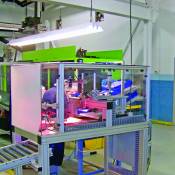
Cleanroom molding requires tools that don’t contaminate the process area.
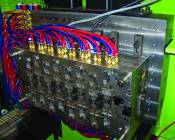
Half of mold production is for internal use. Specialties include two-shot molds, stack molds and molds for biodegradable implantables. Photos courtesy of Mar-Lee Companies.
Mar-Lee Companies, a toolmaker and molder, posted impressive results in 2008, due primarily to operations in medical, where business increased some 25 percent over 2007. The outlook for 2009 is encouraging—20 percent greater sales in medical and company growth of 10 to12 percent, says Stan Bowker, Vice President.
Medical products account for about 35 percent of business at Mar-Lee (Fitchburg, MA). Moldmaking is 10 percent, and consumer packaging and cosmetics have roughly equal shares of the balance.


Sales in 2008 were around $25 million, says Bowker, who credits the company’s performance to its product mix and capabilities. “We’re in the right business segments,” he says, especially when it comes to medical, which “has a lot of OEMs in this area.”
Mar-Lee, in turn, has much to offer medical OEMs. Capabilities include tool design and process specialties like two-shot molding, stack molding, absorbable molding (more on this later) and automation. “We’ve been able to win business and continue growing because of the way we’re aligned to service customers,” Bowker says.
Automation
Automation is an important capability, one that affects mold design as well as part quality and economy. Mar-Lee uses automation on molding lines for operations ranging from assembly and finishing to inspection and quality control. To optimize these operations, parts must be precisely molded. This calls for balanced resin flow, high dimensional tolerance, even heat distribution and efficient cooling among other aspects of tool design. Molds also must be engineered to minimize or prevent flash and to meet cleanroom molding conditions.
“Everything is done automatically inline,” says Bowker, with robots, multi-station rotary tables, vision systems, flow testers and hot-stamping units.
Automation is vital to business for several reasons. The most obvious is that it achieves high levels of quality in part production. But it also holds the line on labor costs, which gives Mar-Lee a competitive advantage. And automation increases the secondary operations Mar-Lee performs. This is important, Bowker says, because many OEMs outsource a lot of their work. “They are cutting back on in-house capabilities and looking for suppliers to pick up the slack. The more you can do, the better.”
Automation also helps build long-term relationships with OEMs. “You’re investing in a complex work cell that’s not easily transferred to other locations.”
High-End Medical Work
Mar-Lee focuses medical work on high-end products, which mean better profit margins and long-term orders.
One such product is absorbable implants. These are molded screws and other devices that are used to surgically reattach anterior cruciate ligaments (the notorious ACL of sports injuries) or other ligament tendons to bones. Mar-Lee molds them of polylactic acid—a biodegradable resin that is absorbed by the body—thus eliminating the need to surgically remove the devices afterward.
To build a mold for absorbable implants and other devices, Mar-Lee Mold (Leominster, MA) operates a “high-end shop,” Bowker says, where 50 percent of production goes to the company (including packaging and cosmetics) and the rest to outside customers. Equipment includes 3- and 4-axis vertical and wire EDMs, high-speed CNC machining centers and lathes, flat and cylindrical grinders and micro-welding systems.
The company operates 33 injection machines ranging from 30 to 750 tons, and employs about 90.
The Future
Mar-Lee has built molds for about 40 years, Bowker says, and remains viable in an area that has seen a significant consolidation of the industry. This is reflected in the fact that the ratio of molds Mar-Lee builds for its needs is increasing. “We will continue to invest in moldmaking, but not look to grow it,” Bowker says. “It’s becoming more of a support for in-house work.”
The company plans to increase business in its current markets. If growth continues at its current pace, there could be plans for expansion in late 2010, Bowker says. “We’re looking at products that need value-added features, where we can apply our expertise in automation, design and tooling to develop relationships with customers.”


Related Content

3D Printing Accelerates R&D Process For Prototyping Molds
Utilizing Axtra3D’s additive technology, LSI Solutions, a medical equipment manufacturer found the compatible machine it needed to accelerate its R&D process for prototyping molds for medical devices.
Read More
Moldmakers Help Drive Innovation in Medical Device Manufacturing
By embracing automation, digitalization and sustainable practices mold builders are helping to meet the medical industry’s increasing demands for precision, efficiency and compliance.
Read More
What’s On the Minds of Medical Mold Builders
Conversations with medical mold builders reveal busy shops, rising automation, digital twins and evolving business strategies amid uncertainty.
Read More
Streamlining Medical Device Development With Modular, Risk-Reducing Tooling Strategy
Fast-Track Tooling enables early validation of medical device designs, reduces risks, accelerates time-to-market and ensures alignment with production molds.
Read MoreRead Next

Adapting To A Continuously Changing Medical Market
This shop has made incremental changes to its manufacturing processes to meet the changing needs of its medical customers.
Read More
How to Use Continuing Education to Remain Competitive in Moldmaking
Continued training helps moldmakers make tooling decisions and properly use the latest cutting tool to efficiently machine high-quality molds.
Read More
Overcoming Pain Points in Moldmaking with AI
Shops that embrace AI as a tool, not a threat, can enhance efficiency, preserve expertise, and attract tech-savvy talent.
Read More